A last chance for the Mercosur -European Union Agreement

Relations between the European Union (EU) and Mercosur go back many decades, but we highlight the signing of the Framework Agreement in the 1990s as the milestone that enabled, a few years later, the start of technical negotiations between 1999 and 2000 with the aim of signing an Association Agreement. The lengthy negotiations went through different stages, but we could summarize them in three milestones where an agreement was close to being reached.
In 2004, the negotiations were very close to being concluded, but this was not possible due to the change in the regional context driven by Brazil and Argentina, with Lula and Néstor Kirchner already in power, which occurred in parallel with the rejection of the FTAA and the deepening of trade relations with China. At that time, the policies pursued by the governments of the two Mercosur members had a clear protectionist bias, and trade liberalization of this nature had no place in their national strategies.
The year 2019 was undoubtedly another key year for the lengthy negotiations, with their conclusion announced in Brussels, led by Mercosur President Macri, who took advantage of Brazil's loss of leadership due to the internal political crisis that led to the impeachment of Dilma Rousseff. This milestone, which was widely celebrated by Mercosur, especially by the Argentine government, was met with greater caution on the European side, given that 2020 saw the approval of the Green Deal, which would substantially change policy related to sustainable development in Europe. It soon became clear that the European Commission had no chance of sending the text of the agreement to the EU Council and Parliament unless a chapter on sustainable development and, in particular, environmental commitments was added.
In parallel with the approval of the Green Deal, the priorities of the EU, but also of Mercosur and the world, changed abruptly due to the pandemic, making it impossible to continue with the negotiations. In addition, Brazil already had Bolsonaro with his controversial views on climate change, threats to abandon the Paris Agreement, and his controversial management of Amazon conservation.
After the setback in 2019, when the complex incorporation process failed to get off the ground, negotiations were relaunched with greater force in 2023 and accelerated particularly in 2024 after Trump's arrival. The negotiations not only incorporated a new chapter on sustainable development but also renegotiated other commitments in various chapters negotiated in 2019 (including changes to the trade liberalization schedule, as in the case of the automotive sector).
Beyond the underlying economic and commercial reasons for defending the agreement, which according to various studies is beneficial to both parties, there is no doubt that the international context marked by the war in Ukraine and Trump's return—in particular his position on free trade, international organizations, and his complex view of Europe as a historic transatlantic ally—pushed the EU to move forward in closing the negotiations for geopolitical rather than economic reasons.
Finally, in December 2024, the negotiations were concluded, as announced at the Mercosur Summit held in Montevideo, which was attended by Ursula von der Leyen. Although this milestone had already been reached in 2019, from the outset the mood among the parties suggested that this time the ratification process would indeed begin, which indeed happened in 2025 with the European Commission taking the necessary steps to formalize its full approval by the Council of the EU in December 2025.
The first stage was the process of translating the text into all the official languages of the EU, which took several months. With regard to the process of incorporating the agreement from the European side from a legal point of view, the European Commission sent two legal instruments in parallel to the Council of the EU and the Parliament, one that must be approved by all members (EU-Mercosur Partnership Agreement, called EMPA) and another provisional agreement (called ITA) covering only those parts that fall within the exclusive competence of the European Commission and which will enter into force with the sole approval of the Council of the EU and the European Parliament. Once the EMPA enters into force, the ITA will expire, an aspect that has also generated controversy if any EU member does not approve the EMPA.
Prior to sending the agreement, the European Commission drew up a restrictive agricultural safeguard without prior consultation with Mercosur, which, after being modified (with lower import increase rates for its application and shorter deadlines for its activation), was negotiated and approved by both the European Parliament and the Council of the EU. At the same time, an agricultural fund worth billions of euros was approved to support European farmers, some regulatory requirements for the sector were postponed, and the Commission committed to implementing very strict controls on imports from Mercosur.
With expectations set on the signing of the agreement on December 20 at the Mercosur Summit in Foz do Iguaçu, Brazil, the bloc's members did not claim the safeguard, which in effect meant reopening negotiations without prior consultation. Mercosur's interest in concluding the agreement, mainly on the part of Lula, avoided a last-minute confrontation, betting that the agreement would ultimately be approved by the EU Council by qualified majority, as it was taken for granted that France, Poland, and Hungary would continue to block it.
Unfortunately, at the last minute, the European Commission had to acknowledge that it could not approve the agreement in the EU Council due to Italy's position. In the midst of negotiations on the European budget—among other issues that Meloni is discussing with the Commission—Italy surprisingly decided to side with France, allowing it to block approval (qualified majorities involve a number of countries and population).
Meloni contacted Lula (and Milei) and asked for another month to conclude negotiations in the EU. Both Ursula van der Leyen and António Costa sent a note to Lula confirming that the interest in signing remains intact and that this would take place in early January 2026.
The news dealt a severe blow to Mercosur, and disappointment was evident in the speeches of the bloc's foreign ministers and presidents. Milei once again presented a harsh assessment of Mercosur and its external negotiations, defending flexibility and bilateral agreements due to the interest in advancing its agreement with the United States. Uruguay, albeit with less emphasis and clarity, also commented on the need to modernize Mercosur in its external agenda, which is functional to its interests in the Comprehensive and Progressive Agreement for Trans-Pacific Partnership (CPTPP).
In short, in 2025, progress was made that marked a new milestone in the long history of negotiations, but unfortunately for the parties, it was not enough for the agreement to be signed and subsequently enter into force. According to statements by the highest authorities of the European Commission and the Council of the EU, there is still one last chance to finalize the signing, which appears to be the last opportunity before the definitive breakdown of a relationship that is very important for both blocs in the complex international context.
There is no longer any room for negotiation; it is time to show leadership and political will.

Ignacio Bartesaghi:
Post-doctorate in International Relations from the University of Valencia (Spain), PhD in International Relations from the University of La Plata (Argentina), and Master in Integration and International Trade from the University of Montevideo (Uruguay).
Director of the Institute of International Business at the Catholic University of Uruguay (UCU) and professor of high dedication in integration and international trade.
He is a member of the National System of Researchers of the National Agency for Research and Innovation (ANII) of Uruguay.
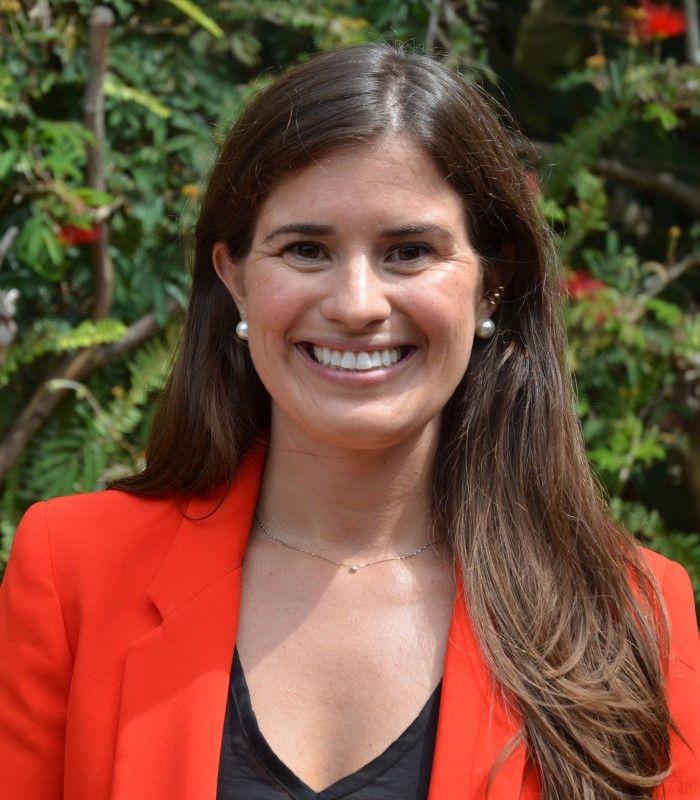
Natalia De María:
PhD in International Relations from the Complutense University of Madrid (Spain), Master's Degree in International Relations from the University of the Republic - UDELAR (Uruguay), Bachelor's Degree in International Business and Integration from the Catholic University of Uruguay (UCU).
Full-time research professor at UCU, specializing in topics related to economic integration and international trade.
Member of the National System of Researchers of the National Agency for Research and Innovation (ANII) of Uruguay.
The opinions expressed in this blog are solely those of the author and do not reflect the views of the EULAS Network.


Comments