EU–Latin America Academic Synergies
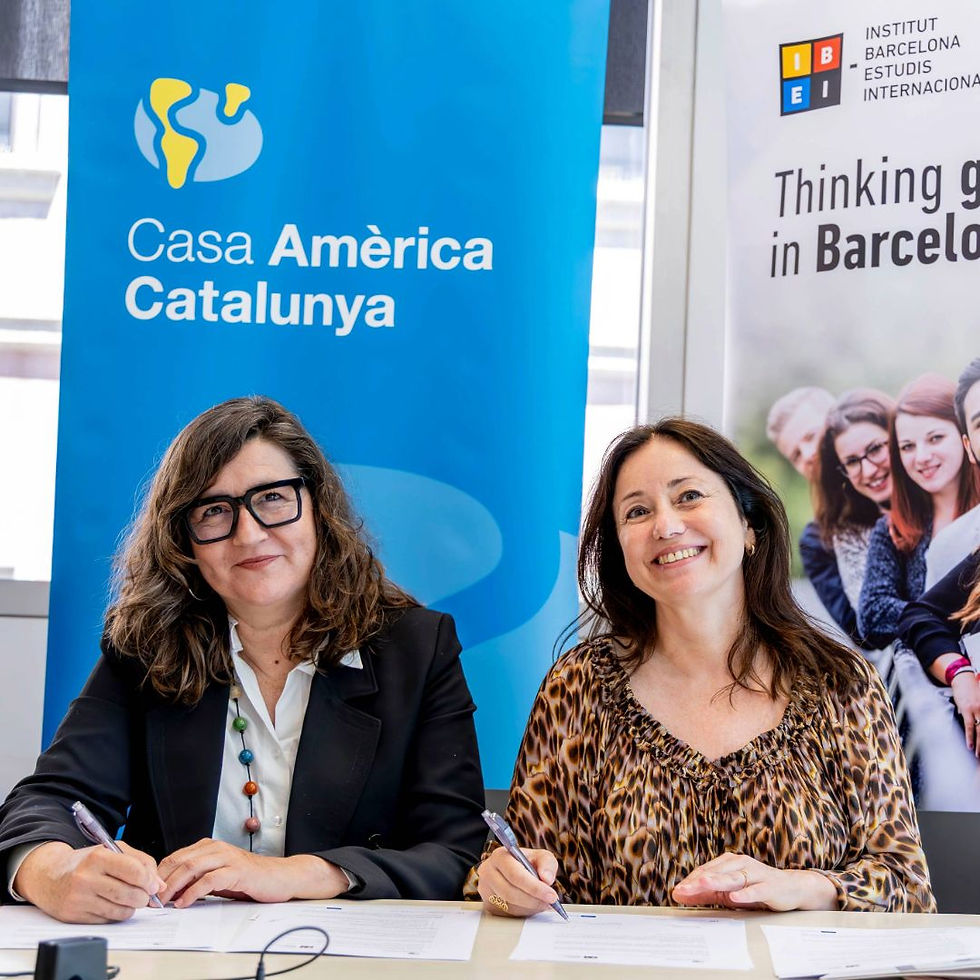


A new strategic partnership for Casa Amèrica Catalunya, IBEI, EU-LAS Network and the LAC-EU Doctoral Network


Trade, Investment, and Sustainability at the Heart of EU–LAC Relations: Highlights from the First EULAS Conference in Rosario
19/12/25, 12:00
From the 10th to the 12th of November, the National University of Rosario (UNR) in Argentina hosted the First International Conference of the Jean Monnet EULAS Network. Titled "Trade, Investment, Finance and Sustainable Development in EU–LAC Relations," the event brought together scholars, practitioners, and policymakers from 24 universities and research centres across Europe and Latin America for a rich three-day programme featuring 12 panels, 2 workshops, 2 roundtables, and a keynote lecture.
The conference opened with remarks from Dean Cintia Pinillos (UNR), Jacint Jordana (UPF-IBEI), Rector Franco Bartolacci (UNR), and María Inmaculada Montero Luque from the Delegation of the European Union in Argentina, who highlighted the significance of the EU–Mercosur agreement and the recently concluded EU–CELAC Summit in Colombia. The keynote was delivered by Diana Tussie (FLACSO Argentina), who examined the global reconfiguration of power and Latin America's potential to move from a passive object to an active subject in international affairs.
The first day was preceded by two workshops: one focused on funding opportunities for EU–Latin America academic mobility and research collaboration — covering Jean Monnet programmes, Horizon Europe, and ERC grants — and a second dedicated to teaching and research methodologies in EU–LAC studies, including the use of EU simulations as pedagogical tools.
Throughout the conference, participants explored the evolving dynamics of bi-regional cooperation across a wide thematic spectrum. Central discussions addressed the implications of the EU Green Deal and its associated regulatory instruments — including the Carbon Border Adjustment Mechanism (CBAM), the EU Deforestation Regulation (EUDR), and the Corporate Sustainability Due Diligence Directive (CSDDD) — and how these shape trade and investment relations with Latin America. The EU–Mercosur Agreement received sustained attention, with debates spanning its institutional implications, environmental conditionalities, and geopolitical significance amid growing competition from China.
A dedicated roundtable examined the outcomes of the Fourth CELAC–EU Summit, situating them within a fragmented global landscape marked by ideological polarisation, low attendance from heads of state, and a contested final declaration. A second roundtable brought together experts to assess green transition policies from both European and Latin American perspectives, highlighting tensions between EU regulatory unilateralism and the need for cooperative, equitable climate governance.
Further panels addressed topics including climate finance, geoeconomic rivalries, labour rights in trade agreements, voluntary sustainability standards, renewable hydrogen cooperation, and the role of financial technologies in regional integration. The conference also explored cultural and legal dimensions of EU–LAC relations, from surrogacy governance to Iberophone economic networks and public attitudes toward energy transition.
The conference concluded by identifying three strategic imperatives for the future of EU–LAC relations: moving from unilateralism to partnership in regulatory design; strengthening regional coordination in Latin America to enhance collective bargaining power; and embedding social inclusion, environmental justice, and technological innovation as core pillars of bi-regional cooperation.
