EU–Latin America Academic Synergies
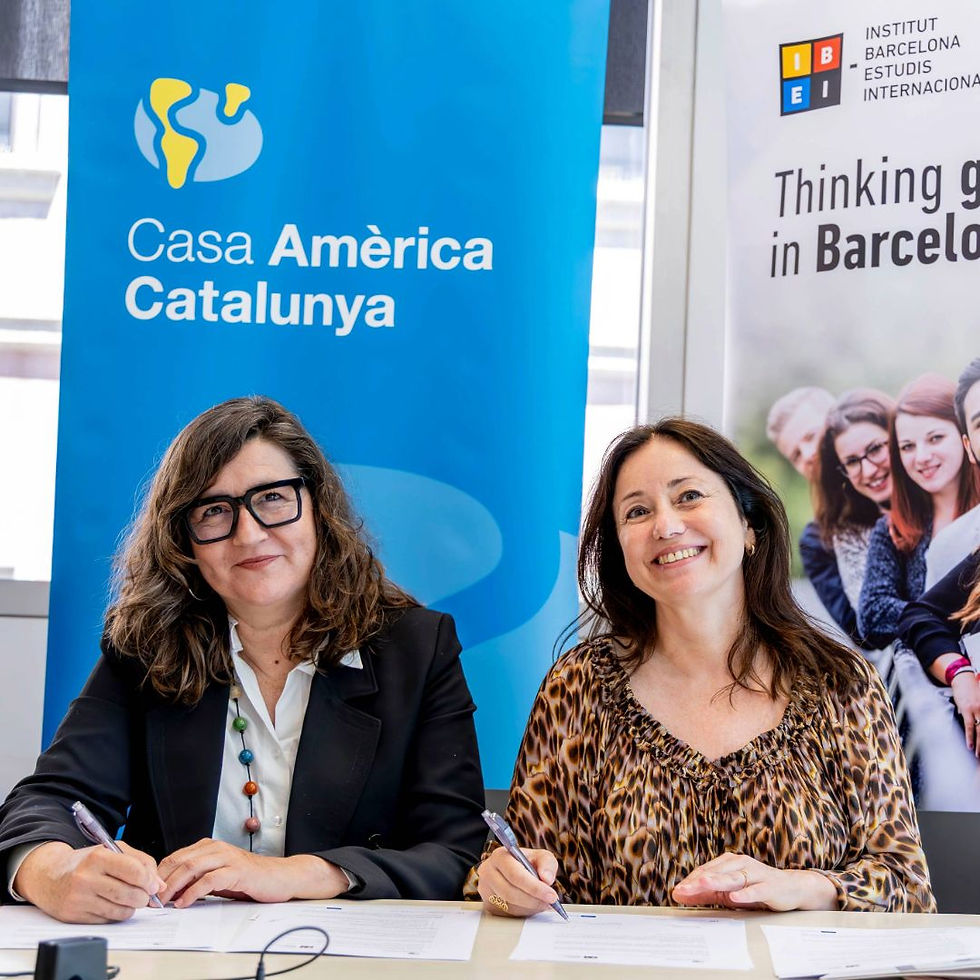


A new strategic partnership for Casa Amèrica Catalunya, IBEI, EU-LAS Network and the LAC-EU Doctoral Network


Bridging Continents for Climate Action: Highlights from the II EULAS Conference on EU–Latin America & Caribbean Cooperation
23/04/26, 12:00
From the 23rd to the 25th of March, the Pontifical Catholic University of Rio de Janeiro (PUC-Rio) hosted the Second International Conference of the Jean Monnet EULAS Network. Titled “Euro–Latin America & Caribbean Cooperation: Governing Climate, Biodiversity, and Achieving the SDGs,” the event brought together scholars and practitioners for an intensive three-day programme featuring 18 panels, 2 workshops, 2 roundtables, and a keynote lecture.
Throughout the conference, participants explored key dimensions of the relationship between Latin America and the European Union in the context of climate and biodiversity governance. Discussions addressed a wide range of pressing issues, including climate change mitigation and adaptation, climate finance, and climate justice. Particular attention was given to the protection of forests and biodiversity - especially the Amazon and the Five Great Forests of Mesoamerica - as well as to environmental democracy within the frameworks of the Aarhus Convention and the Escazú Agreement. Other central themes included energy transitions (from fossil fuels to green energy), strategic raw materials, water governance, and EU–LAC cooperation in advancing the Sustainable Development Goals, with a strong emphasis on climate action, biodiversity protection, gender equality, feminist and social movements, and evolving political approaches.
The opening day welcomed participants from across the network’s 24 partner institutions, alongside external attendees. Following the inaugural session, two workshops were held in PUC-Rio’s main auditorium, focusing on teaching initiatives and research funding opportunities within the EU–LAC framework.
The second day began with a virtual address by Stefaan Hermanns (Directorate-General for Education, Youth, Sport and Culture of the European Commission). This was followed by the keynote lecture delivered by Eduardo Viola (IEA-USP and FGV-SP), who examined the current crisis of multilateralism and its implications for global climate governance. Academic panels continued throughout the afternoon, deepening the exchange of perspectives.
On the final day, nine panels further advanced high-level discussions on climate mitigation regimes and biodiversity conservation. In the afternoon, a roundtable featuring Carlos Milani, Maria Isabel Santos, and Pablo Saturnino Braga - moderated by Ana Paula Tostes - focused on the impacts of climate obstructionism on multilateral negotiations.
The conference concluded with closing remarks by Andrea Bianculli, Jacint Jordana, and Andrea Ribeiro Hoffmann, marking the end of a dynamic and productive gathering dedicated to strengthening EU–LAC cooperation on some of the most urgent global challenges.
