EU–Latin America Academic Synergies
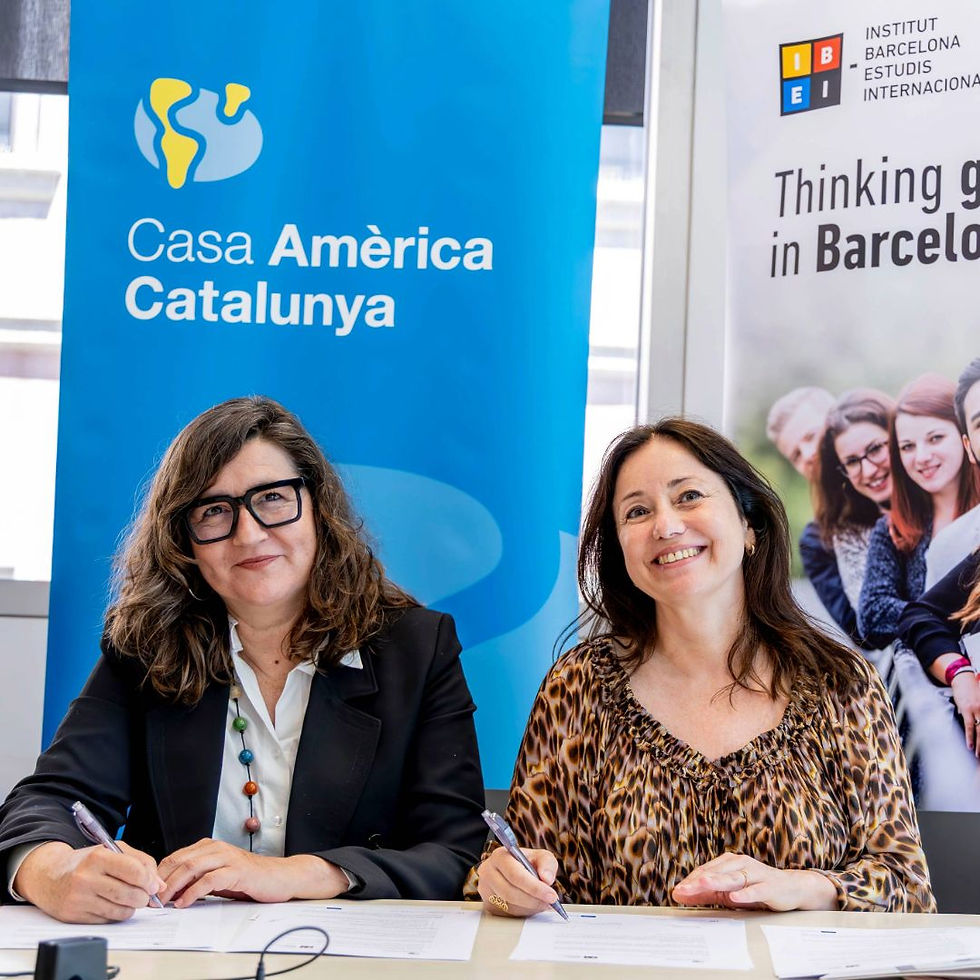


A new strategic partnership for Casa Amèrica Catalunya, IBEI, EU-LAS Network and the LAC-EU Doctoral Network


Latin America and Europe Facing the New Geopolitical Landscape: Will Mutual Misunderstanding Prevail, or the Drive to Strengthen Ties?
29/06/26, 12:00
This past Tuesday on June 30th 2026, the panel "América Latina y Europa ante el nuevo tablero geopolítico” brought together experts as part of the IBEI–Casa Amèrica Catalunya Dialogues series, supported by the MSCA LAC-EU Doctoral Network and the Jean Monnet EULAS Network.
Moderated by Ramon Aymerich, head of La Vanguardia's international desk, the panel featured Detlef Nolte, a specialist in comparative regionalism and EU–Latin America relations at GIGA Hamburg; Lorena Ruano, an expert on European integration and EU–Latin America relations at Madrid's Complutense University; Jordi Soler, the Mexican-Catalan writer and El País contributor; and Yanina Welp, who studies direct and participatory democracy in Latin America at the Geneva Graduate Institute and the University of Girona.
The conversation ranged widely over the current state of relations between Latin America and the Caribbean (LAC) and Europe: free trade agreements between the two regions, Washington's outsized role in the bilateral relationship, the global scramble for rare earth metals, and the uneven fortunes of democracy, eroding in some countries, holding steady in others, on both sides of the Atlantic.
Panelists pointed to the real difficulties the two regions have in understanding one another, and to perceptions that swing between admiration and exoticization. They also noted just how mixed LAC's democratic landscape is, spanning everything from authoritarian regimes to well-functioning democracies, and how hard it has been for the region to carve out a stronger voice on the world stage as the US-China rivalry increasingly sets the terms of international affairs.
Still, common ground emerged too: democracy's staying power despite its flaws, the urgency of shoring it up against a rising tide of right-wing populism, and the renewed political dialogue marked by the EU-CELAC summit in Santa Marta - which, even without top-tier political figures in attendance, stood out as a milestone. The debate ultimately left a nuanced picture, one where neither naive optimism nor resigned pessimism quite fits. Nolte struck a hopeful note, pointing to the cultural ties and democratic institutions Europe and Latin America share. Ruano stressed the importance of building an alliance capable of holding its own between the two rival giants. Soler returned to the need for mutual understanding, while Welp called for deepening democracy across the region. The difficulties are real, but so, on both sides of the Atlantic, is the shared resolve to keep building a relationship that neither region can afford to walk away from.
The IBEI–Casa Amèrica Catalunya Dialogues will continue exploring similar topics. Stay tuned for our next event, set for November 2026.
_JPG.jpg)