EU–Latin America Academic Synergies


A new strategic partnership for Casa Amèrica Catalunya, IBEI, EU-LAS Network and the LAC-EU Doctoral Network


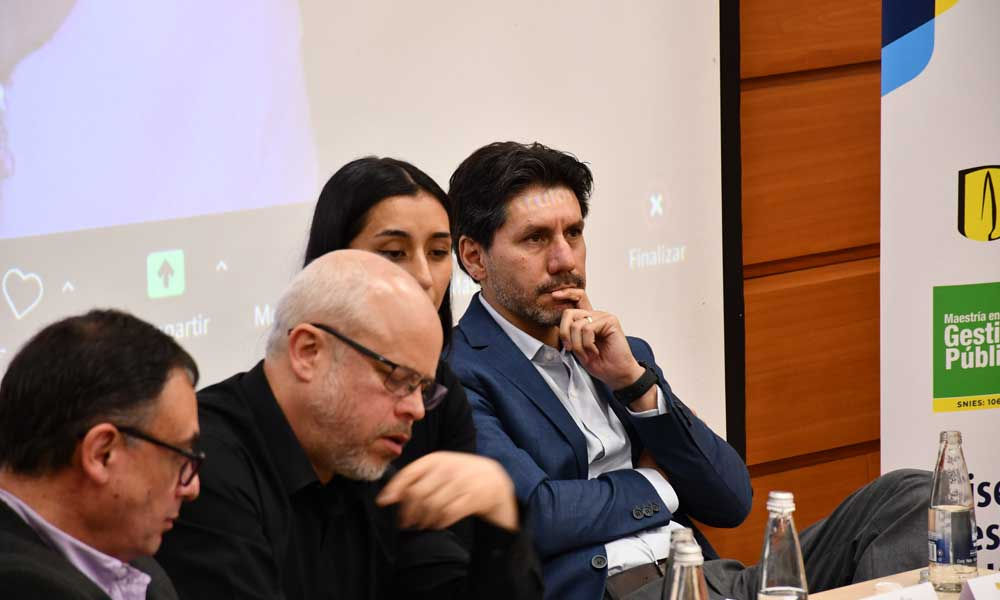


EU–CELAC Academic Forum: Knowledge for Shared Futures
06/11/25, 06:00
Bogotá, 6–7 November 2025: Universidad de los Andes and Leuven Centre for Global Governance Studies
In a world marked by geopolitical fragmentation, the climate crisis, and the questioning of multilateralism, Europe and Latin America and the Caribbean came together in Bogotá to rethink their relationship and build bridges toward a more just, sustainable, and inclusive future. Over two intensive days of dialogue, the EU–CELAC Academic Forum brought together academics, diplomats, policymakers, and civil society representatives to debate shared challenges and opportunities for bi-regional cooperation across six strategic pillars: global governance, digital transitions, human rights, labour protection, climate action, and the fight against organized crime.
This forum was not merely a space for academic reflection, but a concrete commitment to translating knowledge into public policy proposals to inform the 2025 IV CELAC–EU Summit. With a clear advocacy-oriented vocation, the meeting sought to narrow the gap between knowledge production and decision-making, demonstrating that the bi-regional alliance is, today more than ever, a strategic necessity.
Global Governance: Building Bridges in Times of Uncertainty
The first panel placed the EU–CELAC relationship within the context of a multilateral system under strain. With more than 30% of the votes in the UN General Assembly and a significant presence in multilateral organizations, both regions have the capacity to shape the global agenda if they manage to act in a coordinated manner. However, CELAC’s heterogeneity—closer to a list of countries than an integrated bloc—and power asymmetries between the regions complicate the construction of common positions.
Despite these challenges, participants agreed that EU–CELAC summits remain relevant for consolidating shared agendas. The key lies in setting realistic expectations, including subnational and civil society actors, and leveraging coalitions of middle powers—such as Colombia, Argentina, Peru, or Costa Rica—that have demonstrated leadership capacity in forums like the WTO.
“In a scenario of geopolitical fragmentation, the EU–CELAC relationship can offer an alternative model based on human dignity, democracy, and cooperation, rather than zero-sum logics.”
Digital Transition: Connecting with Social Justice
Digital transformation was addressed as both a promise and a challenge. While digitalization can close gaps and modernize economies, it also risks deepening inequalities if not accompanied by robust regulatory frameworks, infrastructure investment, and rights protection.
The debate revealed tensions between the need for immediate connectivity and the importance of building digital sovereignty. Key points that emerged included:
Long-term infrastructure (such as fiber optics) must be complemented by immediate solutions (satellite connectivity) to ensure no one is left behind.
Personal data protection and AI regulation are essential to prevent the concentration of power in a few technology companies.
The digitalization of public services must respect the realities of communities without stable internet access, maintaining accessible analog channels.
It is crucial to promote community-based connectivity models that respect territorial autonomy and ways of life.
The panel concluded that an inclusive digital transformation will only be possible if projects are rooted in dialogue with local communities and incorporate clear criteria for human rights, transparency, and accountability.
Human Rights: A Key Alliance to Defend Democracy
With 17 consecutive years of global democratic backsliding and more autocracies than democracies for the first time in three decades, the defense of human rights emerged as one of the most urgent axes of bi-regional cooperation. The human rights panel emphasized that Europe and Latin America still concentrate a significant share of the world’s democracies, making their alliance a crucial space to rebuild a global democratic agenda.
Discussions focused on three priority areas for cooperation: the care economy, tax justice, and a just energy transition. Regarding care, it was highlighted that both regions face a crisis exacerbated by population aging and labor precarity, making it urgent to recognize care as an autonomous right and to value the work of caregivers. The panel also addressed the structural limitations of the Inter-American human rights system compared to the European one, proposing reforms inspired by direct individual access to international courts to strengthen effective rights protection in the region.
Decent Work: Beyond Treaty Language
Labour chapters in EU–Latin America trade agreements were examined not as decorative clauses, but as potentially transformative tools when activated through technical cooperation, trade union participation, and joint monitoring. The EU–Korea agreement was presented as a key precedent: after years of union pressure and the activation of Domestic Advisory Groups (DAGs), the first panel of experts on trade and sustainable development was convened, which found Korea in breach for denying freedom of association to large segments of workers. The debate concluded that the real challenge for the region lies in adapting these mechanisms to contexts where informality is structural and power asymmetries in global value chains are more pronounced. This requires innovation in participation criteria, ensuring resources for civil society, and recognizing that without internal political and judicial reforms, even the most advanced precedents have limited effects.
Climate Action: A Green Transition with Equity
The panel on climate change and biodiversity highlighted a fundamental tension: while the European Union is advancing increasingly stringent environmental regulations—such as the EU Deforestation Regulation (EUDR)—Latin America faces the challenge of meeting these standards without excluding small producers or deepening territorial inequalities.
Participants stressed that Latin America cannot separate climate from biodiversity, as it is one of the most biodiverse regions on the planet. The expansion of crops such as avocado and coffee into fragile ecosystems, driven by European demand, generates deforestation while small producers are exposed to droughts, changing rainfall patterns, and projected temperature increases of up to 5°C.
The debate identified three priority axes for a just green transition:
Investment in public infrastructure for climate adaptation: early warning systems, high-resolution climate information, and rural extension services.
Financial and technical support to enable small producers to meet traceability requirements without being excluded from markets.
Capacity-building and shared public infrastructures: interoperable climate data systems, satellite monitoring networks, and open traceability platforms.
The central message was clear: without cooperation that accompanies regulatory demands with resources and technical assistance, the outcome will be the silent exclusion of thousands of producers and the reinforcement of economic concentration.
Peace and Security: Lessons from Colombia for the Region
The final panel addressed one of the most sensitive and relevant issues for EU–CELAC cooperation: the fight against organized crime, corruption, and illicit economies, using Colombia’s peace process and its implementation as a laboratory. Panelists identified four structural challenges to peace implementation: geography and inequality limiting state presence in PDET territories (where only one in ten families has access to drinking water and internet coverage is just 2%); the persistence of organized crime capturing communities and local economies; the long time horizons required for peace processes to show real results (a minimum of 25–30 years); and the lack of institutional continuity, with governments restarting plans each electoral cycle.
“Cooperation should not create short-term projects, but rather reinforce existing strategies such as PDET and community-based productive initiatives that respond to real needs.”
The panel concluded with concrete recommendations for European cooperation: strengthening local criminal justice systems and asset forfeiture mechanisms; sustaining PDET and reintegration efforts over time with a long-term vision; and supporting research on the recycling of combatants and the links between organized crime and peace processes, so that public policies are grounded in a more nuanced understanding of violence dynamics.
Toward Shared Futures: Conclusions and Outlook
The EU–CELAC Academic Forum demonstrated that, in a fragmented world, the alliance between Europe and Latin America and the Caribbean is not a diplomatic luxury but a strategic necessity. With more than 30% of the votes at the UN, 21% of the global economy, and 14% of the world’s population, both regions have the capacity—and the responsibility—to promote a model of international cooperation based on human dignity, democracy, the rule of law, and sustainability. Discussions made clear that the success of the 2025 IV CELAC–EU Summit will depend on the ability to translate academic diagnoses into concrete policies, sustainable financing mechanisms, and spaces for shared governance. Declarations are not enough: verifiable commitments, long-term resources, and the active participation of civil society, academia, and local actors in the design and implementation of bi-regional agendas are required.
The forum also revealed that bi-regional cooperation must move beyond hierarchical logics of the past. Europe can no longer position itself as a “moral tutor,” and Latin America has much to contribute by bringing material dimensions—inequality, precarity, and community ties—into the heart of the global human rights agenda. Building a truly symmetrical relationship that recognizes Latin American needs in industrial policy, inequality reduction, and productive diversification will be key to making this alliance credible and durable.
In the closing words of Professor Jan Wouters, the forum was conceived as an exercise in “science diplomacy”: a bridge between academic knowledge production and the decisions to be taken by heads of state and government in Santa Marta. The challenge now is to ensure that this wealth of ideas, proposals, and reflections is translated into an ambitious roadmap with clear goals, monitoring mechanisms, and the political will necessary to build, together, truly shared futures.
More information about the forum and public policy documents available here
.jpg)