EU–Latin America Academic Synergies
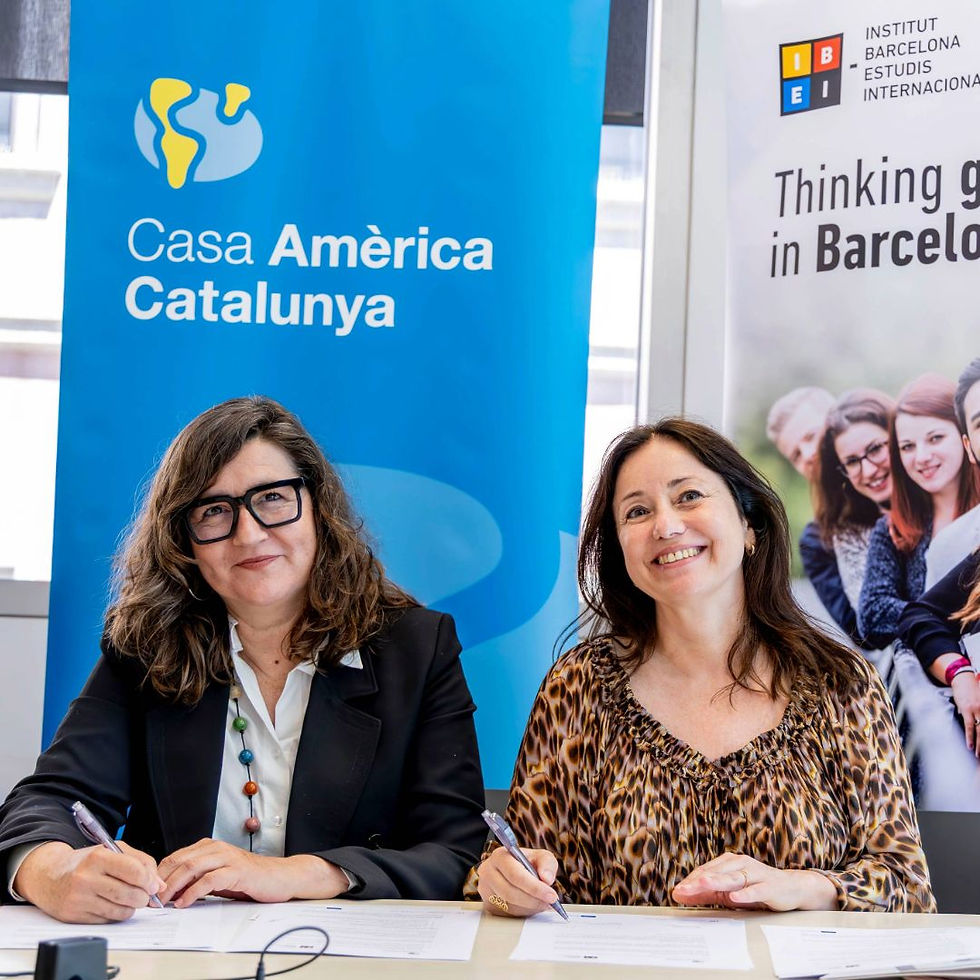


A new strategic partnership for Casa Amèrica Catalunya, IBEI, EU-LAS Network and the LAC-EU Doctoral Network


Central American Integration in the Face of the Challenges of Deglobalisation and Regional Governance
21/10/26, 16:00
In a context marked by the fragmentation of production processes, the intensification of tensions between major global powers, and the rise of nationalist-oriented governments, efforts at regional integration and cooperation appear to be experiencing a progressive decline. Central America, the birthplace of important regional integration initiatives such as the Central American Common Market (CACM) and the Central American Integration System (SICA), is not immune to these global trends. On the contrary, the region is undergoing a period of transformation driven by both external factors—such as the increasing interventionism of the U.S. government—and internal political dynamics, including the rise of right-wing populist movements in El Salvador, Costa Rica, and Honduras.
With the aim of analyzing how these processes influence the dynamics of political and economic integration in Central America, Jean-Paul Vargas Céspedes, Ronny J. Viales Hurtado, and David Chavarría Camacho edited the volume “La encrucijada en la Integración Centroamericana: asimetrías, desglobalización y desafíos a la gobernanza regional ” (ICAP, 2026). The work brings together contributions from specialists in Central America and other parts of the world, offering a broad and pluralistic perspective on the main challenges facing regional integration. Its 25 chapters address a variety of fundamental issues, including the historical trajectory of the Central American Integration System (SICA), the region's structural asymmetries, deglobalization processes, governance, trade, migration, energy, Central American identity, and the political, economic, and institutional challenges that shape the future of integration.
This publication is the result of a collaboration between the Central American Institute of Public Administration (ICAP), the Center for Historical Research of Central America (CIHAC) of the University of Costa Rica and EU-Latin America Academic Synergies (EULAS).
